Biomimetics 2014

Dear Biomimetic Students,
Welcome one and all to our wonderful Academy blog.
You will, I'm certain, have eleven fun filled and inspiring days during which your perceptions and opinions concerning the sciences (all of them), engineering, mathematics, design, art, architecture, nature and evolution will be mixed together and leave you refreshed, renewed, re-ignited and ready to push forward the boundaries of your – and perhaps one day, humanities – knowledge and skills.
You will, I'm certain, have eleven fun filled and inspiring days during which your perceptions and opinions concerning the sciences (all of them), engineering, mathematics, design, art, architecture, nature and evolution will be mixed together and leave you refreshed, renewed, re-ignited and ready to push forward the boundaries of your – and perhaps one day, humanities – knowledge and skills.
But it's not all work, work, work!
There is the choir, the orchestra, a varied sports programme - you ask and David will do his very best to provide - anyone for cricket or touch rugby? How about a pre-breakfast jog-&-swim? evening activities including the magical camp fire, BBQ and the incredibly popular and important KüA's - where you get to lead an activity that you are passionate about. I'm really looking forward to being one of your students!
 |
| Schloss Loburg, Ostbevern, Muenster. |
The secret to a successful academy is to get involved, to think, to communicate, to be a team player and to try something new. Always be yourself.
I'll say it now… the Biomimetics course will be in 100% English!
Please grasp this wonderful opportunity with both hands and immerse yourself in the language as much as you can. You may find it frustrating and slow going at times but stick with it, try your best and the rewards will come.
My name is Nick and I am one half of
your Course Leader team. I’m British and have an academic background in
physics, engineering, Bioscience and mathematical modelling. I’ve been a
teacher of physics for over a decade and recently dipped my toes into Applied Science lecturing at University. After the academy I'll be teaching physics and science at a beautiful little school on the North Yorkshire coast - it's rather like Hogwarts (in fact the 'Hogwarts Express' is about 5 km away.) For those interested my hobbies are cycling & cycle sport, rugby, keeping fit, and writing.
What about the Forum?
Hopefully this will be up and running very soon. Please ask me (email, then forum) any and all questions
pertaining to the biomimetics course and direct your general academy
questions to Nadja (email, then forum.)
What, you are probably asking, is Biomimetics?
Here are a few of great presentations
to help you take the next step towards a deeper understanding of Biomimetics
and biomimicy (Bionik in Deutsch)


This lady, Janine Benyus, is very
ideological but does present an overview of the general concepts of biomimetics
very well indeed: http://www.ted.com/talks/janine_benyus_biomimicry_in_action.html
The next gentleman, Prof. Robert Full, is
famous in the field and is a little more focused on the methodology and design process in his 1st presentation: http://www.ted.com/talks/robert_full_on_animal_movement.html
His second presentation illustrates beautifully how engineers and scientists observe nature and then use these careful and intelligent observations to develop technology:
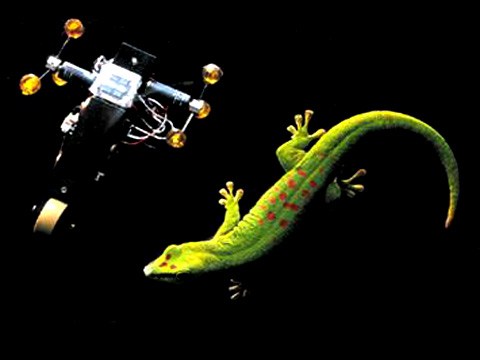
Insects and animals have evolved some amazing skills - but, as Robert Full notes, many animals are actually over-engineered. The trick is to copy only what's necessary. In this presentation he shows us how human engineers can learn from animals' tricks:
A little more applied biomimetics: Marcus Fischer presents his project - he led the team at Festo that developed the very first ultra-light 'robotic' bird that flies like a real bird:

So, you've seen some very skilled presentations, and now its over to you…
Your pre-academy task is to arrive with
a 10 minute (+ 5 minute maximum) presentation on one of the following concepts…
--- IMPORTANT – please read the following very carefully!---
Please
select one topic title only from the
list below and email me your name and
the title.
Your Task: to prepare a 10-15 minute
presentation on the topic of your choice. It is to be given to our Biomimetic’s
group on the first full day of the Academy.
You will have access to: a projector (Beamer), a laptop
(Microsoft Office 2010), a large blackboard with chalk, walls for posters, and
a computer room (for emergency last minute changes!)
This is a
very important task as the information you communicate – in wonderful English – will set a solid
foundation for the rest of the Biomimetic course AND provide a useful first practice
in presentation skills. The latter will become increasingly important as you
will soon see J
The title in green, followed by a delegate name, have already been selected... first come, first served!
The 2014 Project titles
The first three are important as they
will provide the group with an overview of the story and methodology of
Biomimetics. It would be very useful if a few of you chose to present them
• Bionik design through history - - - Nathalie (30th June, 2014)
• Bottom Up Design – what is it and how does it work? Robin (1st July, 2014)
• Evolution, natural selection and the Biomimetic design process.
Some other great topics to cover would be...
• Stability in construction – how a water lily inspired the world.
• Lightweight structure: from bones to building. - - - Linus (5th July, 2014)
• Build upwards: from grass to the skies!
• Clever construction: climate and energy tricks from Nature.
• Soaking up the sun: photosynthesis and a butterfly’s flight.
• Simple surfaces: soap bubble to honeycombs.
• Folding and unfolding: from nature to new techniques.
• The Lotus effect: what principle is this and how did it develop and where is it used today? - - - Marlen (3rd July, 2014)
• The Gecko’s Foot: what principle is this and how did it develop and where is it used today? - - - Gereon (30th June, 2014)
• Velcro: inspired by what? Developed how? Used why, where and when? Georg (30th June, 2014)
• Natures textiles: keeping cool on the run. - - - Peter (1st July, 2014)
• Swimming through the sand: bio-inspiration from the Sahara. - - - Marek (10th July, 2014)
• From a rat’s tooth to a self-sharpening blade. - - - Maike (4th July, 2014)
• From Shark skin to swimsuit - - - Nele (29th June, 2014)
• Whale fins to rotor blades.
• How have penguins inspired Biomimetic engineers? - - -Tim (8th July, 2014)
• The biomimetic car: inspired by the boxfish (kofferfisch) - - - Max (9th July)
• Flight: seed dispersal and the parachute
• Flight: winglets, turbulence and the Albatross
• Flying silently: inspired by the owl. - - - Corinna (11th July, 2014)
• The ‘Bionik’ Robot
• Muscle contraction and bio-inspiration
• Walking on other planets: from insect to explorer
• OLE: Offroad-LoschEinheit - - - Friederike (15th July, 2014)
• Communication from nature - - - Anais (30th June, 2014)
• Spider silk: strong, elastic and sticky! - - - Maximilian (1st July, 2014)
• Algorithms from nature – what can we learn from Ant and how can we describe (and predict) their behaviour.
• Optics from nature
• From bats to automatic car parking – ultrasound from nature. - - - Ann-Marie (9th July, 2014)
• Swarm behaviour in nature – what can we take from this? - - - Mascha 19th July, 2014)
• Bionik from Medicine: prosthetics – basic to myoelectrical stimulation
• Bionik from Medicine: photoreceptors in nature and how this is inspiring optical implants. Seeing again!
• Bionik from Medicine: Chochlea Implants – hearing again.
• Biomimetics: from the sea-gherkin!
• The Axolotl: seaweed glue & worm glue?
• Stability in construction – how a water lily inspired the world.
• Lightweight structure: from bones to building. - - - Linus (5th July, 2014)
• Build upwards: from grass to the skies!
• Clever construction: climate and energy tricks from Nature.
• Soaking up the sun: photosynthesis and a butterfly’s flight.
• Simple surfaces: soap bubble to honeycombs.
• Folding and unfolding: from nature to new techniques.
• The Lotus effect: what principle is this and how did it develop and where is it used today? - - - Marlen (3rd July, 2014)
• The Gecko’s Foot: what principle is this and how did it develop and where is it used today? - - - Gereon (30th June, 2014)
• Velcro: inspired by what? Developed how? Used why, where and when? Georg (30th June, 2014)
• Natures textiles: keeping cool on the run. - - - Peter (1st July, 2014)
• Swimming through the sand: bio-inspiration from the Sahara. - - - Marek (10th July, 2014)
• From a rat’s tooth to a self-sharpening blade. - - - Maike (4th July, 2014)
• From Shark skin to swimsuit - - - Nele (29th June, 2014)
• Whale fins to rotor blades.
• How have penguins inspired Biomimetic engineers? - - -Tim (8th July, 2014)
• The biomimetic car: inspired by the boxfish (kofferfisch) - - - Max (9th July)
• Flight: seed dispersal and the parachute
• Flight: winglets, turbulence and the Albatross
• Flying silently: inspired by the owl. - - - Corinna (11th July, 2014)
• The ‘Bionik’ Robot
• Muscle contraction and bio-inspiration
• Walking on other planets: from insect to explorer
• OLE: Offroad-LoschEinheit - - - Friederike (15th July, 2014)
• Communication from nature - - - Anais (30th June, 2014)
• Spider silk: strong, elastic and sticky! - - - Maximilian (1st July, 2014)
• Algorithms from nature – what can we learn from Ant and how can we describe (and predict) their behaviour.
• Optics from nature
• From bats to automatic car parking – ultrasound from nature. - - - Ann-Marie (9th July, 2014)
• Swarm behaviour in nature – what can we take from this? - - - Mascha 19th July, 2014)
• Bionik from Medicine: prosthetics – basic to myoelectrical stimulation
• Bionik from Medicine: photoreceptors in nature and how this is inspiring optical implants. Seeing again!
• Bionik from Medicine: Chochlea Implants – hearing again.
• Biomimetics: from the sea-gherkin!
• The Axolotl: seaweed glue & worm glue?
I hope you
have all found something interesting a fun to research in the list above. About
a week before the academy begins I will provide you with – hopefully via the forum – a presentation guidance protocol that
should be very useful in helping you finish your 1st project.
Please
remember – you need to arrive at the academy with a completed presentation that
is ready to go!


No comments:
Post a Comment